URI Geo 320: Earth materials - Private Mineral Project
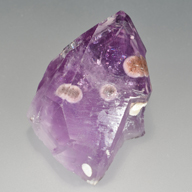 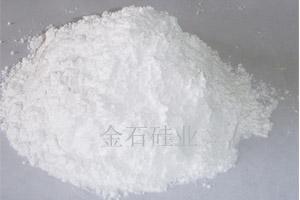 | BackgroundThe planet we live on is a mainly silica dioxide rich planet. This means that there are an abundance in different forms of SiO2 on earth. One from of SiO2 that can be found on earth is cristobalite. Cristobalite an igneous rock that occurs mainly in areas of volcanic activity. For this reason cristobalite has become associated with natural glass rocks like obsidian. In the field, cristobalite can be found most commonly in nodules of obsidian called “snowflake obsidian”.Cristobalite can be also found in pure form as either α-cristobalite or β-cristobalite. α-Cristobalite is a form of cristobalite that is associated with lower temperatures while creating the igneous rock. β-Cristobalite on the other hand is associated with higher temperature during creation. Even though the forms have different temperatures there is no diffident line where you only get α or β which means that the areas in which they ca be found can vary to different degrees. Cristobalite got it’s name from where it originally occurred in Cerro San Cristobal, Pachua, Mexico. Other places where cristobalite has also been found are California at Coso Hot Springs, Inyo Co.; and at Cougar Butte, Siskiyou Co. |
About Geology 320:Earth Materials at URIIn Geo 320: Earth Materials, students learn hand-sample identification and characterization of minerals and rocks, including crystallography, composition, classification, origin, and relationship to geological occurrence; also includes aspects of soil-forming minerals, ore deposits, and other mineral resources. |
